
How to Style Landscape Prints in Small vs Large Spaces
How to Choose the Right Size for Landscape Photography Prints
Landscape photography is meant to be immersive. The right print size helps pull you into the scene—whether it’s a wide coastal view, rolling mountains, or a quiet moment in nature. Unlike abstract or graphic art, landscape prints rely heavily on scale and composition, which makes sizing especially important.
If you’re looking for a more detailed, step-by-step sizing breakdown, I cover that in depth in my guide on how to choose the right print size for your space. Below are a few landscape-specific guidelines I’ve learned from seeing these prints live in real homes.
Let the Landscape Breathe
Landscapes often benefit from larger print sizes than other types of artwork. Wide scenes—like coastlines, mountain ranges, or open skies—feel more natural when they have room to breathe.
As a general rule:
Medium walls: 16×24 or 20×30
Large walls: 24×36, 30×40, or panoramic formats
Larger sizes allow details, depth, and natural scale to come through the way the scene was originally captured.
Match Orientation to the Scene
Most landscape photography works best in a horizontal orientation, especially for wide, open environments. Horizontal prints help guide the eye across the image and create a calming, expansive feel.
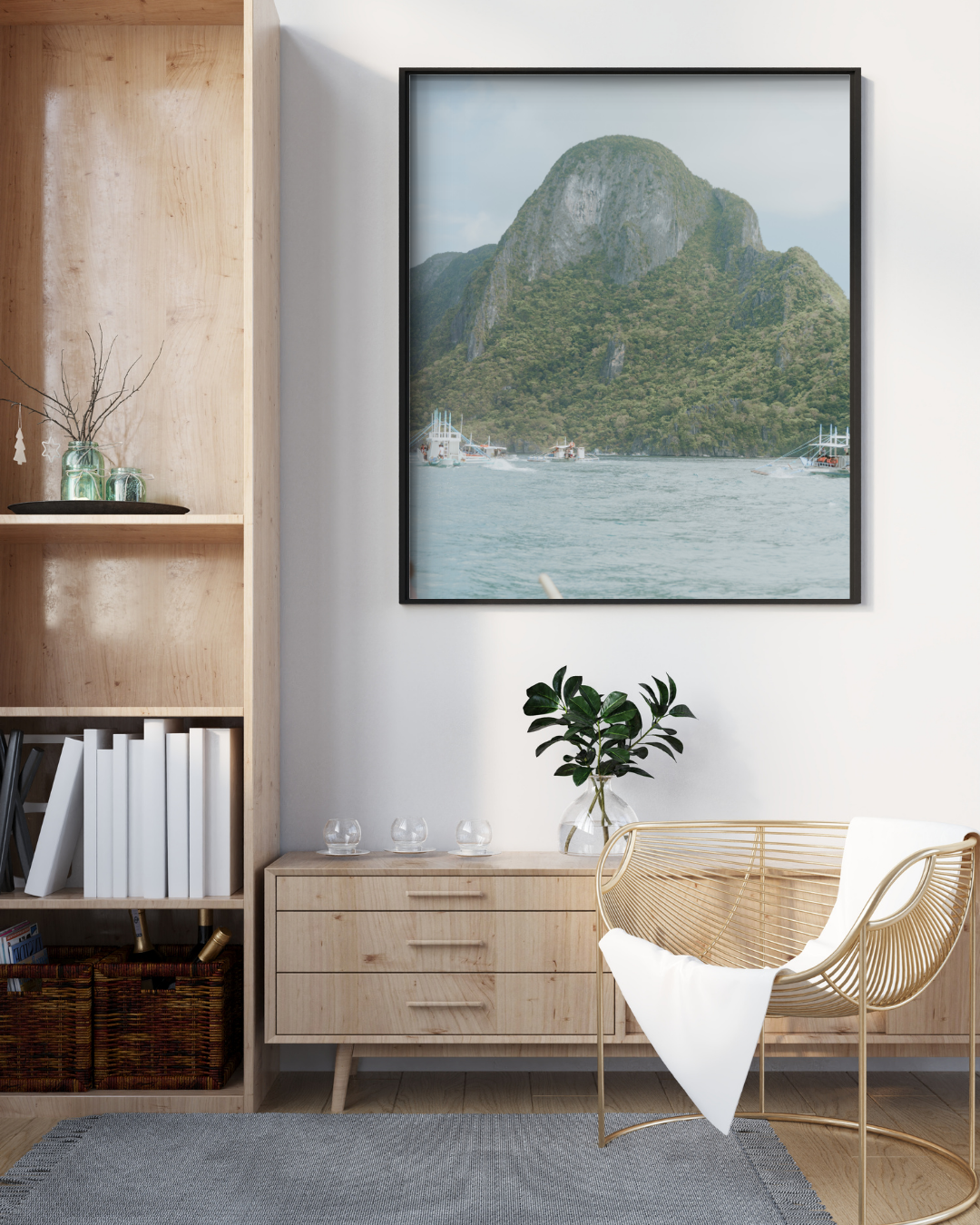
That said, vertical landscape prints work beautifully for:
Palm trees or forests
Cliff faces or narrow valleys
Choose the orientation that matches how the landscape naturally flows.
Scale With Viewing Distance
Landscape prints are meant to be experienced from a distance. If the print will be viewed from across a room, sizing up often creates a stronger impact.
A helpful reference:
If you’re usually viewing the print from 6–10 feet away, sizes 24 inches wide and larger tend to feel more immersive and balanced.
Smaller sizes work best in spaces where the viewer will be closer, like bedrooms or reading nooks.
Consider Furniture and Negative Space
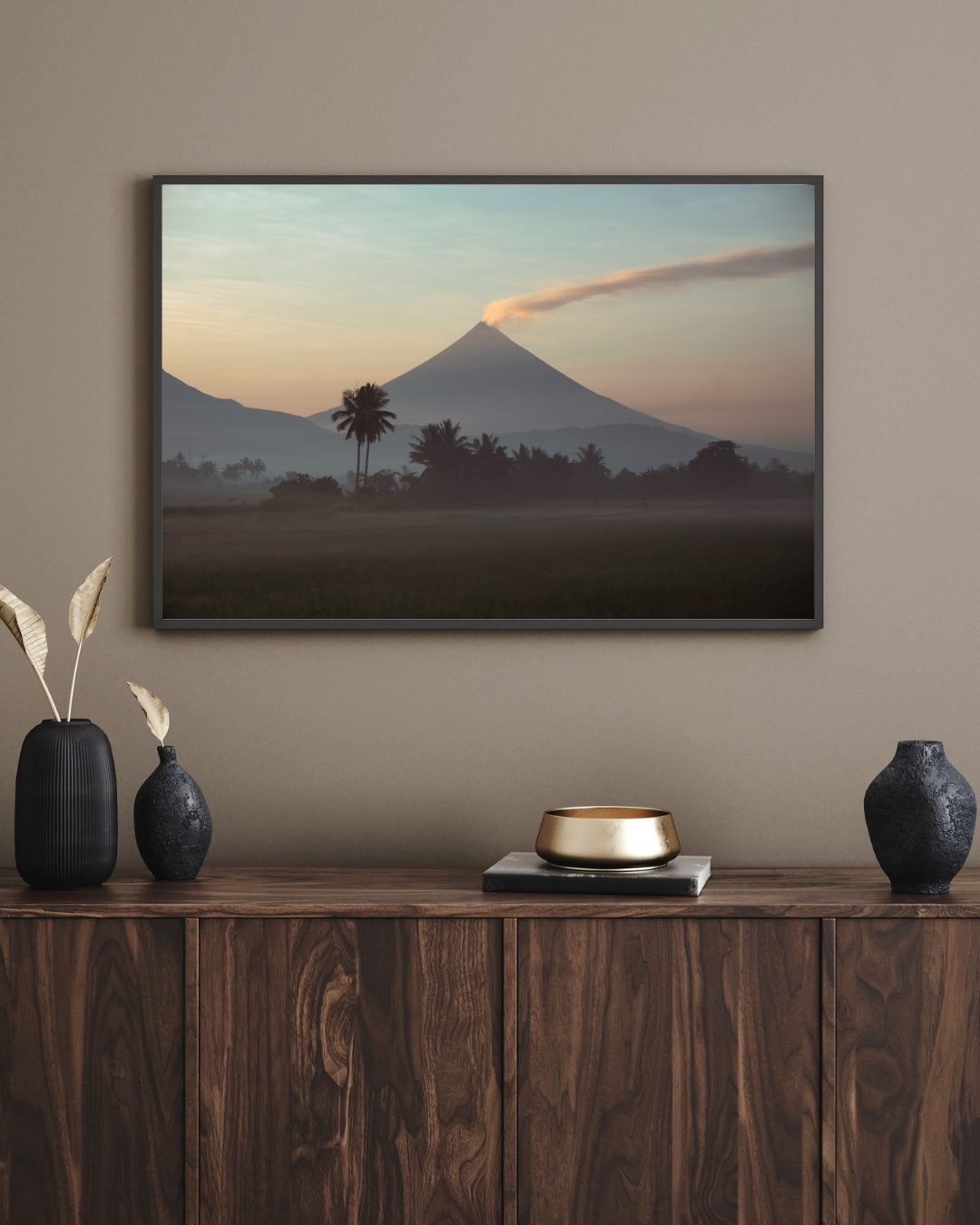
When hanging a landscape print above furniture, aim for about two-thirds the width of the piece below it. This keeps the artwork visually grounded without overpowering the space.
Also, don’t be afraid of negative space. Landscape photography benefits from a little breathing room—it allows the image to feel intentional rather than crowded.
Landscape photography has a unique relationship with scale. The right size doesn’t just decorate a wall—it sets a mood, creates depth, and brings the outdoors in. If you’re ever unsure between sizes, trust this instinct: landscapes usually look better slightly larger than you think.